Zero Drivetrain Contact • AWD & 4WD Safe • 24/7 Dispatch • Upfront Pricing • Inoperable Vehcile Towing • Equipment Transport • Safe & Secure • Flatbed Towing • Classic Car Towing • Luxury & Exotic Specialists • Long Distance Towing • Local Towing •Zero Drivetrain Contact • AWD & 4WD Safe • 24/7 Dispatch • Upfront Pricing • Inoperable Vehcile Towing • Equipment Transport • Safe & Secure • Flatbed Towing • Classic Car Towing • Luxury & Exotic Specialists • Long Distance Towing • Local Towing •
— What Is Flatbed Towing
The Gold Standard
In Vehicle Transport
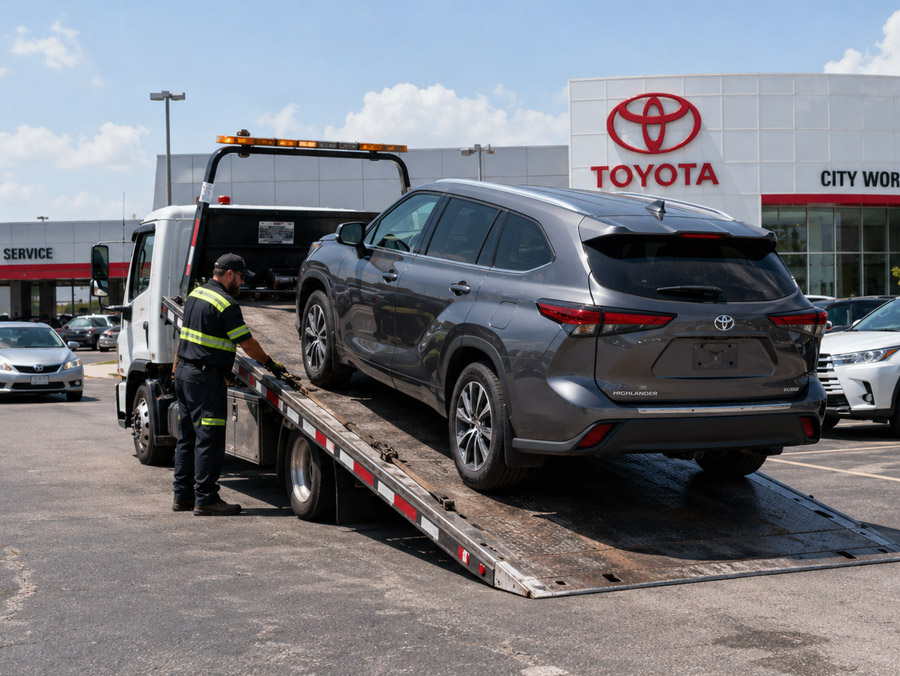
A flatbed tow truck carries your vehicle on a completely level, safe, and secure platform — all four wheels fully off the road from pickup to destination.
Most tow trucks use a wheel-lift — a hydraulic arm that scoops the front or rear tires and rolls the other two wheels along the road during the towing process. It works for dedicated front-wheel-drive or rear-wheel-drive vehicles. But for all-wheel-drive vehicles, wheel-lift towing can put undue rotational stress on your drivetrain, and, for a growing list of vehicle types, it can cause serious — and expensive — damage.
Flatbed towing eliminates that risk entirely. Your vehicle is winched onto or driven onto a hydraulically tilted steel platform, secured with tie-down straps at the manufacturer’s designated points, and transported with zero contact between your tires and the road surface. It’s the method dealers, manufacturers, and insurance companies recommend for their most valuable vehicles — and it’s what we dispatch when the job calls for it.
Our flatbed tow truck operators are trained to handle everything from a daily driver that won’t start to a six-figure exotic vehicle that needs kid-glove treatment. We use soft strap protection when warranted, confirm tie-down points before loading, and ensure your vehicle is properly secured before we head out.
— When You Need A Flatbed
Your Vehicle Requires A Flatbed
In These Situations
02 — Luxury & Exotic Cars
High-Value Vehicles
Luxury sedans, sports cars, and exotics often have air suspension systems, carbon fiber ground effects, diffusers, and ultra-low clearance profiles that make wheel-lift contact a risk — and that make a careless hook-up a body damage event. Flatbed towing loads from the rear via a tilted ramp, which any experienced operator can manage without touching a single painted surface. If your vehicle is worth protecting, flatbed is non-negotiable.
03 — Inoperable Vehicles
Won’t Start. Won’t Steer. Won’t Shift.
Wheel-lift towing without dollies requires a vehicle to at least be shifted into neutral and have functional steering. A flatbed removes all of those requirements. Using wheel skates and a winch, we can load a vehicle that is completely non-functional — locked wheels, seized engine, dead electronics, deployed airbags, or a transmission that won’t budge. If your car won’t do anything, our flatbed will still get it where it needs to go.
06 — Long Distance Transport
Cross-City & Cross-Country
For any move that’s more than a local haul, flatbed protects your vehicle’s tires, suspension, and drivetrain from miles of unnecessary road contact. Wheel-lift towing over long distances can add unnecessary wear, especially for vehicles with specialized tires, lowered suspension, or alignment-sensitive setups. If your vehicle is going more than a few miles, flatbed is the professional choice — and the one many manufacturers recommend.

— How It Works
Four Steps.
Handled Right.
01
Call Dispatch
Dial 800-555-0192. A live dispatcher answers immediately — no menus, no hold queues. Tell us your location, vehicle type, and where you need to go.
02
Get Your Price & ETA
Before anyone is dispatched, you get an accurate rate and honest arrival window. No commitment required. You decide before we roll.
03
Driver En Route
Your driver is dispatched from the nearest location. You’ll receive confirmation with driver details. Dispatcher stays available if your situation changes.
04
Service Completion
Vehicle is loaded, secured, and delivered to your chosen destination. Our driver walks you through the paperwork and confirms delivery. Done clean.
— All Vehicle Types Accepted
If It Has Wheels,
We Can Move It
From lowered sports cars and AWD crossovers to electric vehicles, classic cars, and anything that won’t start — flatbed towing isn’t one-size-fits-all either. Every vehicle that rides our bed comes with its own loading requirements, tie-down approach, and securement considerations. Whether we’re winching on a car with locked brakes using wheel skates, soft-strapping an exotic, or running a Tesla across state lines, the right technique keeps your vehicle protected from the moment we hook up to the moment we deliver.








— Equipment & Loading Process
What Happens When
We Load Your Vehicle
01
Hydraulic Tilt Bed
The flatbed platform tilts hydraulically to create a loading ramp. Drivable vehicles drive up under their own power or with light assistance. Non-drivable vehicles are winched up via a cable attached to the frame to ensure no damage is done during the loading and unloading process.
02
Wheel Dollies for Inoperables
For vehicles with locked wheels, seized brakes, or any condition that prevents rolling, we often use wheel dollies or skates — low-profile rolling platforms placed under each tire that allow the vehicle to be winched onto the bed without dragging. Your wheels don’t need to roll. Your car doesn’t need to do anything.
03
Frame & Wheel-Based Tie-Downs
Once on the bed, your vehicle is secured at a minimum of four points — either at the manufacturer’s designated frame tie-down locations or through the wheel basket method, which straps across each tire without touching suspension components. We confirm securement points before moving. No improvisation, no shortcuts.
04
Soft Strap Protection
For luxury vehicles and motorcycles, where the slightest contact can leave a mark, we use soft strap protectors at every contact point. No bare metal chains. No strap-to-paint contact. If your vehicle has a body kit, carbon splitter, or side sills that could be contacted during loading, we will discuss it before we begin.
05
Pre-Transport Walkthrough
Before we load up and drive off, we conduct a visual confirmation with you present: securement points checked, straps tensioned and locked, and any pre-existing damage documented with photos. You sign off when you’re satisfied. This protects both parties and ensures you know exactly how your vehicle is secured.
06
Destination Delivery & Off-Load
When we reach your vehicle’s destination, we’re as careful as when loading. The bed is tilted, the straps are released in order, and your vehicle is rolled or winched off the platform. For long-distance runs, we communicate with destination facilities to ensure there’s a clear, safe space to off-load before arrival — no surprises on the receiving end.
— Protecting Your Vehicle
What To Tell Us
When You Call
The more we know before we dispatch, the better equipped your driver will be when he arrives. This isn’t just about sending the right truck — it’s about making sure we have any specialty equipment on board and that your tow truck operator isn’t surprised by a situation that requires a different approach.
— COMMON QUESTIONS
Flatbed Towing FAQs
Request flatbed towing for any AWD or 4WD vehicle, any electric or hybrid vehicle, any vehicle that won’t go into neutral, any luxury or exotic vehicle, any post-accident vehicle, and any motorcycle. For standard front- or rear-wheel drive cars going a short local distance, wheel-lift is often fine — but flatbed is never the wrong choice, and it’s always the safer one.
Yes — this is one of the primary advantages of flatbed towing. We use wheel skates or Go-Jacks to load vehicles that cannot be driven, rolled, or steered under any circumstances. A completely inoperable vehicle with seized brakes, a dead electrical system, or a locked transmission can be loaded safely. Tell us when you call so we have the right equipment on the truck when we arrive.
In most cases, yes — we need owner authorization and vehicle verification before loading. In some situations, an authorized representative (family member, property manager, fleet coordinator) can handle approval. Call us to discuss your specific circumstances and we’ll work out a solution that works.
Depending on the specifics of your situation, flatbed towing can be slightly more costly than wheel-lift towing. For example, if you’ve been involved in an accident and the process takes more time, we’ll need to be compensated for our time. However, for vehicles where wheel-lift towing risks drivetrain damage — AWD, 4WD, EV — the cost difference is insignificant compared to a transmission or transfer case repair. We give you the price before we dispatch, so there are no surprises either way.
Your vehicle is secured using industry-standard tie-down straps anchored at the manufacturer’s designated frame points or using the wheel basket method — straps that cross each tire rather than attach to the suspension or body. For sensitive vehicles, we use protective soft strap covers at every contact point. We do a physical walkthrough with you before we drive off, so you can see exactly how your vehicle is secured.
Absolutely — and flatbed towing is the primary way we tow EVs. Every major electric vehicle manufacturer explicitly prohibits towing with wheels on the ground because the electric motor acts as a generator when the wheels spin, which can cause permanent damage to the battery management system and drive inverter. Flatbed is not a preference for EVs — other than using a wheel-lift with dollies, it’s the primary way we handle towing every electric vehicle in our network.
— OTHER SERVICES
More From
The Towing Pros